Top Takeaways
>> The aim with eco friendly heating systems is to move away from fossil fuels and into renewable energy sources
>> For whole house solutions, heat pumps and electric forms of heating are the most sustainable
>> Assess how electrifying your home will affect costs, particularly if you don’t have solar PV panels
Most of us rely on a type of fossil-fuel powered central heating system. Around 80% of homes in the UK have a gas combi boiler. LPG, or liquid petroleum gas, can be found quite often too.
But for us who care about the environment, these central heating systems aren’t ideal. We want more sustainable heating in our homes. This is where an eco-friendly, electric-based heating system choice comes in.
There are a number of more sustainable ways to heat your home that work effectively (you’ll feel nice and warm) and efficiently (you’ll use less energy and have to pay less for fuel).
Best household Eco Heating Systems
Here are some of the better ways to heat your home with the environment in mind. It’s worth noting that there’s some form of carbon footprint associated with all of these methods. Nothing’s perfect. But these ways are better than straight up gas or oil.
1. Heat Pumps
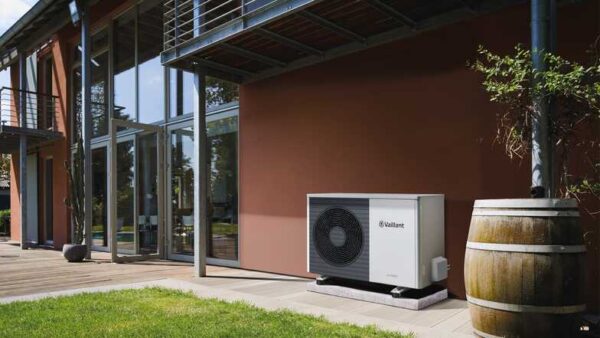
Heat pumps are going to be the future for UK homes. They will be the main replacement for gas powered boilers and the government should be rolling them out en-masse now, but they’re way behind on their own targets.
When I visited the Energy House 2.0 test centre at the University of Salford, all future homes had a heat pump. You have two main options: air source heat pumps (ASHP) and ground source heat pumps. ASHP are the most popular and are much more affordable. Ground source heat pumps require more work to install.
Air-to-water ASHPs will take care of your hot water needs and are most like a combi boiler, but you’ll need to install some form of hot water tank.
Heat pumps are super efficient. For every unit of electrical energy the heat pumps uses for power, they create 3-4 times that in heat energy. This efficiency is unrivalled with other heating systems. You can learn more about the pros and cons of heat pumps here.
To be most effective, it’s wise to have good-to-excellent levels of home insulation.
| Pros | Cons |
|---|---|
| Zero carbon emissions | High upfront cost |
| Work day and night with same efficiency | Annual maintenance needed |
| Super efficient | Need space to install |
| Grants available | Require an electricity source |
2. Solar Heating
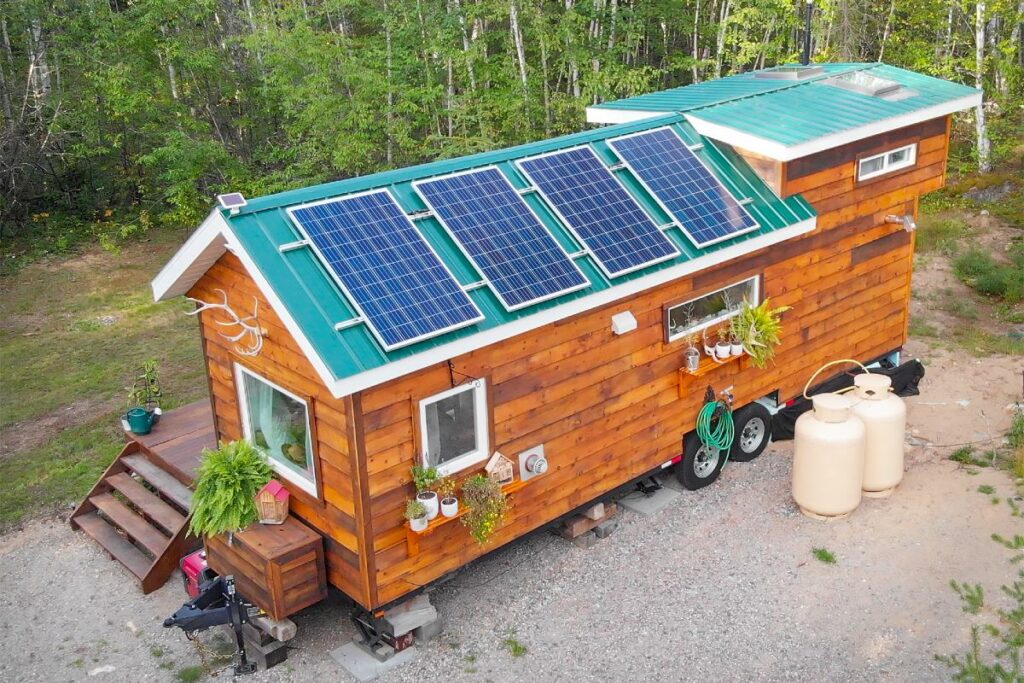
If there’s one consistent source of energy in the world, it’s solar.
The sun is always emitting a tremendous amount of energy and light that can be harnessed during daylight hours.
Solar energy is probably the ultimate renewable in that it’s free, constant and environmentally friendly.
We can’t always see the sun in the UK, but you’ll be glad to know that it’s not an absolute necessity for your solar heating system to work. Although bad weather will reduce efficiency, plenty of solar energy is still getting through.
There are three main options for solar heating:
- Solar air heaters
- Solar water heaters
- Solar Photovoltaic (PV) Panels
All three require separate systems and can be quite expensive to install.
Solar air heaters and solar water heaters can heat your home directly, but solar PV panels first and foremost produce electricity. This electricity can then be used to power systems within your home, including for example an efficient electric heater. You will need a large solar array to heat your home alongside all your other electrical appliances.
Although they do require a fairly hefty initial investment (which you can get grants for), solar heating offers a lifetime of renewable, free energy that’s as clean as a whistle.
All three systems can offer a completely off-grid lifestyle for your heating needs, but if you are planning to, or do, live off-grid then it’ll be wise to invest in a solar storage battery so that you have a constant source of energy when it’s dark outside.
| Pros | Cons |
|---|---|
| Little to no maintenance costs | High initial investment costs |
| Free energy from the sun | Will need qualified professional to install |
| Provide very clean green energy | Roof space could be an issue |
| Safe to use | Bad weather will lower efficiency |
| Efficient heat energy | Solar energy storage batteries can be expensive |
3. Underfloor Heating
Underfloor radiant heating, as it’s formally known, sounds a rather luxurious way to heat your home.
You might not put it everywhere, but it can work very effectively in certain areas. The premise of radiant heating is to heat up an object rather than the air.
In the case of underfloor radiant heating, the technology cleverly heats a large surface, where the heat then rises and warms the whole area above the surface. It’s a good way of distributing warmth efficiently and effectively, and you won’t get any cold spots.
There are two main types of underfloor heating:
- Water-based
- Electric
A water-based system works through underfloor pipes, whereas an electric-based system heats underfloor wire loops.
Both systems can work in conjunction with a variety of flooring material, including wood, laminate, vinyl, tile and carpet. Both can be powered by solar or another off-grid method.
| Pros | Cons |
|---|---|
| Easy to run | Installation cost |
| Doesn’t take up any living space | Fixing any issues is problematic |
| Works with all flooring types | Doesn’t heat the whole space like traditional radiators |
| Safe to use | |
| Energy efficient | |
| Easy to control temperature (Smart Thermostat) | |
| Requires no maintenance | |
| Won’t leave any cold spots where installed |
4. Electric Heaters & Radiators
Electric radiators are becoming a more popular addition to modern homes. You can now get smart electric radiators to make your home even more efficient. Some learn your habits, switch on when you enter a room and much more.
Being electric, these systems don’t have water running through them. It’s usually a type of heating element, for example made of ceramic, that warms up and distributes heat. A main benefit is that you have heat at the click of a button. No warming up time or burning of fuels.
A drawback is that electric heaters are known to consume a lot of energy. Although newer models are much more efficient, the unit cost of electricity can make these expensive to run if you plan to heat the whole home. The initial investment can also add up. Each heating panel can range in price from £200-£500 depending on the size and power, meaning 10-15 panels will add up.
There are all sorts of electric heat appliances available today, including standalone heaters, fires, wall heaters and electric radiant heaters.
| Pros | Cons |
|---|---|
| Inexpensive to buy | Energy intensive to run |
| No maintenance costs | Likely to leave cold spots within your home |
| Can be thermostat controlled | Can be bulky |
| Immediate heat available | Likely to require mains power |
5. Multi-Fuel Stoves – Wood, Pellets and Biomass
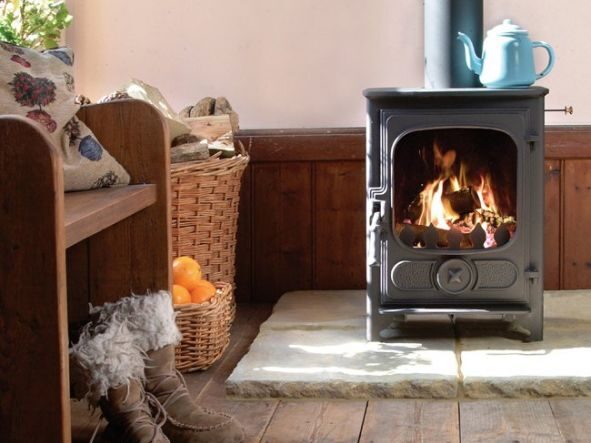
Multi-fuel stoves are getting a bad time because of the particulate matter they can release into the air. I still believe these can be run in a more eco friendly manner if the fuel is sourced in a sustainable way.
There are two main options: wood burning stoves and multi fuel stoves. Rather than whole house heating, stoves are better for smaller spaces and rooms.
As the name suggest, you should only burn wood in a wood burning stove. With a multi fuel stove you have a few more options. Yes wood, but you can also burn biomass pellets, wooden chips, turf briquettes, heat logs and even coffee logs.
The wider option of materials makes it an attractive option. It also means you’re not solely reliant on wooden logs, which are in a way depleting a resource. You can source wood in a more sustainable and renewable manner of course.
Whether you opt for a multi-fuel or purely wood burning stove, they both occupy a fairly small footprint of space within your home and just need a single chimney vent going to the outside.
They’re also not as expensive as you probably think with prices ranging from £600 up to the costly end of £3,000. You can have a read at how much log burners cost to run here. You also might like to read this article on are log burners bad for the environment?
| Pros | Cons |
|---|---|
| Off-grid heating solution | Stove isn’t attached to a thermostat |
| Double up for cooking/water boiling | Heat isn’t initially available instantly |
| Emit radiant heat from all sides | Can’t leave unattended |
| Good heat efficiency | Not remote controllable |
| Clean fuel choice | Release particulate matter |
| Cheap to run | |
| Unique fire ambience |
6. Biomass Boilers
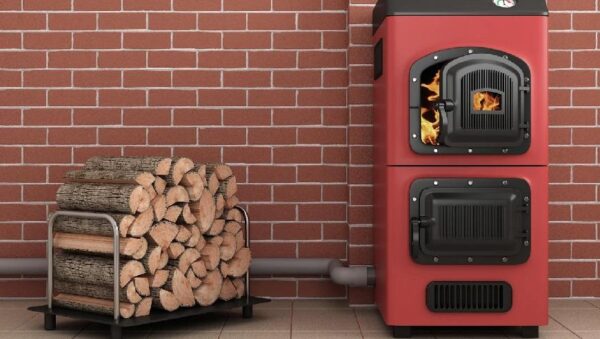
Biomass boilers are a more eco heating system than traditional gas-powered boilers.
Biomass boilers work in a simple way. Biomass is burned and heat is generated. This heat warms water in a boiler. This is then circulated around the house. Essentially, biomass boilers are bigger versions of stoves that are connected to a central heating system.
Different biomass fuel sources can be used, including wood, pellets and other logs. Pellets, for example, can be made from recycled sources such as sawdust, wood shavings and forms of grass. The organic matter gets crushed and compressed together to form the pellets. These biomass pellets also tend to emit less pollution in comparison to wood logs.
You can read up on the pros vs cons of biomass boilers here.
| Pros | Cons |
|---|---|
| Off-grid power | Large up-front cost |
| Low running costs | Require regular maintenance |
| 70-90% energy efficient | Carbon dioxide still emitted |
| Considered carbon neutral | Large and bulky |
7. Green Energy Supplier
If it’s not possible for you to install one of the above eco friendly heating systems, you’re next best bet is to switch supplier to a Green Energy provider.
Gone are the days when everyone had to choose from one of the ‘Big 6’ energy providers that fueled all homes with a combination of fossil fuels.
We’re now in a much better situation to be able to choose an environmentally conscious energy provider. Green suppliers in the UK, such as Ecotricity and Octopus Energy, provide electricity from 100% renewable sources, harnessing energy from solar, wind and water.
Rather than many confusing tariffs, these green suppliers tend to offer fixed rates or a small number of options. However all are usually very affordable and competitive, more often than not cheaper than fossil fuel-based energy suppliers.
Because they tend to be a bit more new-school in their approach, everything is done online, seamlessly and without hassle – no more waiting on the phone for 30 minutes before getting through to an unhelpful advisor, only to find out you have to write a letter or something.
Customer service is top priority and because of this, they offer highly tuned digital systems for all their communications, including switching providers which is incredibly easy and no hassle at all on your part.
| Pros | Cons |
|---|---|
| 100% renewable electricity (reduced carbon footprint) | Still a type of mains energy |
| Affordable, cheap, non-confusing tariffs | Not compatible with off-grid living |
| ‘On tap’ energy, no disruption to service | Potential geographic limitation |
| Easy to switch to green provider |
The problem with modern heating methods

Unfortunately, many modern heating options aren’t too environmentally friendly.
Although energy providers, such as Ecotricity and Octopus, are getting better at sourcing fuels from renewable energy forms, fossil fuels are still all too prevalent.
We’re all pretty accustomed now to the harm that burning an inordinate amount of fossil fuels cause to the world – unnaturally fast warming, more frequent extreme climatic events, air pollution, landscape and habitat destruction. Plus a whole load more. It’s not good.
This is why it’s crucial to be aware of the eco friendly ways you can heat your home, so we can get away from fossil fuel use.
On-grid vs off-grid heating systems
From a top level approach, your home has two main energy streams it can utilise:
- On-grid power
- Off-grid power
On-grid heating systems are reliant on mains energy.
Off-grid heating systems are completely self-sufficient. No mains connection, just the elements to provide you with your energy.
On the whole, cutting reliance on mains energy will have a positive environmental impact.
Additional ways to help your eco heating
The best way to make any home more efficient from a heating point of view, is to ensure that it’s fully insulated.
Top-notch eco friendly insulation will reduce your energy usage, reduce bills and lower your carbon footprint.
You’ll also want to make sure you don’t have any draughts allowing your warm air to escape to the outside. There are many ways to improve home insulation.
Smart thermostats – such as those from Nest and Hive – are a great way to regulate indoor temperatures efficiently, effectively and easily. Being more efficient with your energy of course saves you money and the unnecessary use of a resource.
Another little tip is to just adjust your thermostat a little bit lower.
Even reducing the desired temperature by 1oC can save a large amount of energy over the year and I bet you barely notice the difference to your warmth and comfort.
Like that? Read other articles on heating your home…