Biomass boilers have split people’s opinions. Some people think they are a good thing for the environment, whereas others think they’re causing more harm than good.
In this article, we’ll talk through the pros and cons of biomass boilers.
Can Biomass Boilers Be eco Friendly?
When compared against fossil-fuel powered boilers, yes, biomass boilers are a more sustainable option.
Biomass energy is organic, which means it’s produced from materials derived from living organisms. Wood, plants, and waste are all excellent sources of biomass materials, also known as biomass feedstock.
Domestic biomass boilers are powered by wood logs, pellets or wood chips. Ultimately, biomass fuel comes from wood, which is used to generate electricity or direct heat for our homes.
Since biomass boilers don’t rely on any fossil fuels, they can be considered as a form of renewable energy. Biomass feedstock can be grown, managed and produced in a sustainable way. That said, this form of renewable energy isn’t quite in the same league as sunlight and wind, which don’t require any physically managed resources.
In contrast, fossil fuels are a non-renewable source and eventually will at risk of depletion. This isn’t to mention the environmental damage they cause when burned. As you know, fossil fuels are the primary cause of global warming as concluded by the Intergovernmental Panel on Climate Change (IPCC).

How Can Biomass Boilers Be better for the Environment?
Using biomass boilers offers several environmental benefits, with the following two being the most significant:
1. Reduce CO2 Emissions
Statistically speaking, when used to generate electricity, biomass emits 14% to 90% fewer greenhouse gas emissions than fossil fuels.
However, biomass boilers do emit carbon dioxide while operating, albeit in smaller amounts. A long study conducted between 1990 and 2017 confirmed that switching to biomass boilers instead of fossil fuels would reduce CO2 emissions. This study, published in 2020, was based on the monitoring of 27 European Union member countries after they switched to biomass energy.
The findings revealed that as wood biomass energy consumption increases, CO2 emissions decrease.
It also helps that wood is considered a carbon-neutral energy source. During the photosynthesis process, plants absorb carbon dioxide – this is why tree planting with the likes of Ecologi is so popular now.
With this in mind, any CO2 that biomass boilers emit from burning wood is thought to be balanced out by the amount they absorb as living trees.
2. Produce Useful Waste
Ash is a natural by-product of biomass boilers. Wood ash has been found to have significant soil health benefits (when used correctly of course), as well as holding important macronutrients such as:
- Potassium
- Phosphorus
- Magnesium
This means that the ash produced by a biomass boiler can be added to soil as a fertiliser to help plants thrive. It’s also being researched for other applications, such as replacing cement in mortars, which would be brilliant.
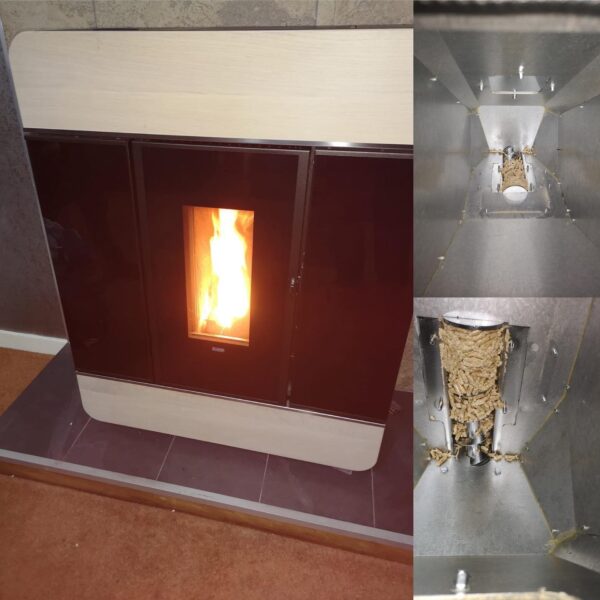
Negative impacts of Biomass Boilers on the Environment?
Unfortunately, using biomass boilers can cause environmental damage too.
As the demand for biomass energy grows, so does the need for wood. In fact, one of the three main causes of deforestation is wood extraction for purposes such as domestic fuel. This isn’t good.
The phenomenon of deforestation shouldn’t be taken for granted. It has a hugely negative impact on wildlife by destroying their habitat and reducing their chances of finding food. Over time, this contributes to the loss of biodiversity on a large scale.
Even more, the removal of such a large number of trees has a direct link to climate change and increased greenhouse gas levels in the atmosphere.
The sad reality is that we deforest around 10 million hectares of land each year. This is roughly the size of Portugal. Currently, only half of this deforested land grows back.
Are Biomass Boilers Polluting?
Another negative impact of biomass boilers on the environment is the pollutants they emit.
The majority of the harmful gases produced by biomass energy can degrade air quality. In some cases of inefficient biomass burning, the gases emitted can cause health issues for humans.
It’s been shown that biomass burning contributes between 20 and 60 teragrams of greenhouse gases to the atmosphere in the form of methane each year. This amounts to about 5 to 15% of global annual methane emissions. High concentrations of methane can be harmful to individuals.
Other harmful pollutants emitted by biomass boilers include sulfur dioxide (SO2), nitrogen dioxide (NO2), and particulate matter (PM). That said, each pollutant is emitted at varying concentrations. They’ll be determined by factors such as size, design and efficiency of the biomass boiler.
Biomass boilers can cause indoor air pollution too. However, like wood burning stoves, biomass boiler use advanced technologies to limit indoor emissions and provide a much safer internal environment than traditional fireplaces.
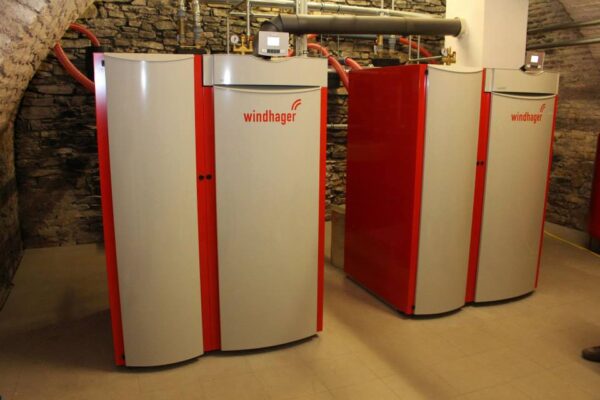
Is a Biomass Boiler Worth It from a sustainability perspective?
Overall, a biomass boiler is a way to begin lowering your carbon footprint.
These boilers can help with the recycling of wood waste as they can operate from good quality scrap wood, in the form of pellets and chips, that has no other purpose. This makes good use of an existing resource.
Not only that, but the process of converting wood into energy produces a useful by-product, ash. Even if you didn’t use the ash in gardening, it wouldn’t harm the environment if left as it is.
I think it’s fair to say that a biomass boiler would be a sustainable investment since it’s less harmful than any fossil fuel alternative.
Related reads

What Is SCOP When It Comes To Heat Pumps?
Top Takeaways >> SCOP stands for Seasonal Coefficient of Performance>> It represents your heat pump’s…

How Much Do Air Source Heat Pumps Cost? (2025 Guide)

Are Heat Pumps Worth Installing In Your Home?
You’re likely to hear contrasting views about heat pumps. Many in the knowledge think they’re…

Looking to Improve Your Home Energy Efficiency? Get This Done First

Will GB Energy Help Cut Your Bills?
Back in July 2024, the newly installed Labour government announced GB Energy. With a country…