Top Takeaways
>> An ethical coffee should take into account the full process from growing and harvesting to transporting, roasting and getting it to the customer.
>> Third party verified labels, such as Fairtrade and certified organic, offer a good indication of company ethics.
>> Go further on the ethics by seeing if the producer’s name is included on the bag, or the farm or factory where it was produced. This way you know a better price has been paid.
We all love a good coffee don’t we? I definitely do! But we don’t always know where it’s been sourced and how it’s got to our cup.
This is where it’s useful to know about responsibly sourced, ethical coffee. That’s because coffee can have potential negative impacts on the environment and on the humans who work in the plantations.
Choosing a sustainable coffee to drink at home is a much more positive way to drink your brew. It’s usually much tastier too. It’s an important point as 65-80% of coffee consumption across the world is done at home. This guide will talk you through all you need to know about ethical coffee.
What does ethical coffee mean?
There isn’t a standard definition to what ethical coffee is, but the idea of encompasses a few different areas.
For me, a truly ethical coffee is one is grown, harvested, transported, roasted and sold to consumers in the fairest manner for farmers and workers whilst causing as little environmental damage as possible.
Until recently, the majority of consumers were not thinking about sourcing ethical coffee.
However, there’s been a clear rise in sustainability, more ethical buying habits and doing better for the environment. Caught up in this has been coffee production, mainly driven by younger generations who’ve grown up global and environmentally aware.
Key areas of more ethical coffee
We can break these areas of ethical coffee down a little further.
- Growing sustainable coffee – is this done without the use of pesticides i.e. organically? Has the land been deforested or is the coffee shade-grown under the canopy of biodiversity-friendly trees?
- Working conditions – are workers treated fairly and are basic human rights considered?
- Fair price to the farmers – are the big multinationals involved taking all the profits or is there a more direct route from farm to cup?
- Sustainable certification – has the coffee been officially certified by a recognised international body?
- Environmentally friendly packaging – if you’re buying coffee for home, is this packaged in non-recyclable plastic, a recyclable version like LDPE 4 or perhaps something like omnidegradable?
For all these reasons, ethical coffee can also be known as responsible sourced coffee or sustainable coffee. These are all versions of the same thing.
The current pinnacle of environmentally friendly coffee is that which is certified as Bird Friendly. You can learn more about shade grown bird friendly coffee here.
the impact of traditional coffee industry
The coffee industry has two major aspects of impact that needs to be considered from a sustainability perspective:
- Environmental costs
- Social impacts
environmental impacts
Large-scale coffee plantations owned by the big conglomerates are linked with:
- Wide-scale deforestation to plant non-native coffee trees – According to a WWF report, a whopping 2.5 million acres have been cleared in Central America to expand coffee plantations. Furthermore, 37 of the 50 countries with the highest deforestation rates in the world are also leading coffee producers.
- Mono-cultures
- Habitat and biodiversity loss
- High levels of pesticide and herbicide use
- Carbon emissions
- Soil erosion
- High water consumption
This all contributes to the deterioration of some of the most biodiverse areas of the world, including the Amazon and South East Asia.
The environmental impact of coffee farming is actually getting more severe over time.
Increased demand for inexpensive coffee has led farmers to pivot to more intensive cultivation methods, phasing out the more eco-friendly shade-grown coffee in favour of sun-exposed coffee planted as huge mono-cultures.
Growing sustainable coffee should counteract these negative impacts. Responsibly coffee plantations will also be managed in a way that conserves nature, ecosystems and wildlife.
Social impacts
Mass-scale coffee production, processing and roasting suffer from the same, well-documented ethical issues that fast fashion does – incredibly low wages, unsafe working conditions, modern slavery and child labour.
It’s thought there are around 125 million farmers who rely on coffee as their main source of income across the world. That’s about the same size population as countries such as Japan and Mexico. With so many workers, mistreatment in farms under the control of corporate giants is common place. This is because corporate giants only care about profit margins.
In Brazil, the world’s leading coffee supplying country, child labour has been reported extensively. Many undocumented and underpaid adults and minors have been found working on coffee plantations without any of the legally obliged safety equipment.
Modern slavery is also a concern. Many plantation workers across the Global South are enslaved through owing unfair debts, having no work contracts and through blackmail.
In terms of average pay, coffee workers are only paid 7–10% of the retail price of coffee. In Brazil, this number can go as low as 2%.
Unsafe working conditions and inhumane living quarters add even more shadow to the long list of unethical industry standards employed by coffee multinationals.
The importance of smallholder coffee farmers
Good ethical coffee usually comes from independent, small-scale operations that are distinct from the big multinational coffee producers.
Numbers suggest that roughly 25 million smallholder coffee farms produce 80% of the world’s coffee. But the vast majority of profits are made further up the supply chain by corporate giants, multinationals and in the consuming country.
Small, independent producers can often keep to more environmentally-friendly farming methods, provide fair wages as well as adequate working conditions to their workers. Some of these small holders join together to form cooperatives. These cooperatives are primarily member-owned and driven by ethics and community.
Independent coffee growers have a bigger focus on high quality coffee, known as specialty coffee. This is opposed to low quality, mass produced beans that end up as the likes of supermarket own brand instant coffee.
The reason these farms are generally small isn’t just to be more sustainable. It’s a legacy from colonial rule. When the invading powers left, land was returned to native producers, but only in small patches.

How do you know if you’re buying ethically sourced coffee?
As a general rule of thumb, multinational producers selling coffee at suspiciously low prices don’t fit the ethical bill.
The first sign of an ethically sourced and eco-friendly coffee you’ll notice is a higher price tag. This is justified by fairer wages for workers and the expenses of farming shade-grown coffee, where the beans mature at a slower rate. However, any coffee brand can put their prices up so we need to know more than this.
Nine times out of ten, ethical coffee brands will showcase their ethical and environmental credentials on their website and packaging by using verified, third party logos. A lack of transparency and certification is the first red flag you should be watching out for when picking your next bag of coffee.
There are a number of well-known sustainable coffee certification schemes, such as:
- Rainforest Alliance – This certification means that the coffee was produced using methods that support the three pillars of sustainability: social, economic and environmental. Rainforest Alliance certified farms must meet strict standards for protecting the environment, the rights and well-being of workers, and the local community.
- Fairtrade – Fairtrade certification focuses on ensuring better prices, decent working conditions and fair terms of trade for farmers and workers in developing countries. It also promotes sustainable farming practices and community development.
- USDA Organic – Coffee with the USDA Organic seal is grown and processed according to strict guidelines that prohibit the use of synthetic fertilisers, pesticides and genetically modified organisms (GMOs). Organic farming practices promote biodiversity and soil health.
- Soil Association Organic – Based in the UK, the Soil Association is a nonprofit organisation that certifies organic products to a set of standards that are some of the highest in the world. In addition to prohibiting synthetic inputs and GMOs, Soil Association standards also include sustainable land management, protection of wildlife and biodiversity, and promotion of animal welfare. You can read more about the Soil Association here.
- Direct Trade – Whilst not a formal certification, many specialty coffee roasters use this term to indicate that they purchase straight from farmers, cutting out middlemen. This allows roasters to develop relationships with producers and often pay higher prices for quality coffee.
- Bird Friendly Coffee – This certification, developed by the Smithsonian Migratory Bird Center, ensures that the coffee is organic and shade-grown, meaning it is grown under a canopy of diverse tree species that provide habitat for birds and other wildlife. This certification has the most robust shade requirements.
Going further than the logos
These certifications are independently verified and are definitely a step in the right direction. They have helped many people just like me and you to purchase coffee with a clear conscious.
Many ethical brands however will go well in beyond these logos. They will provide full transparency on how their supply chain works and name the farms in which their coffee has been sourced from.
On top of that, direct trade and straight-to-source operations are also most likely to compensate their workers and farm owners fairly. These are where the best coffee roasters buy directly from the producer, cutting out a third party.
With this in mind, it’s worth researching how exactly your morning cup of coffee is getting to you. The fewer the steps and middlemen, the more the brand is likely to implement ethical practices!
What’s the difference between Fairtrade and sustainable coffee?
You can say that Fairtrade is a type of sustainable coffee.
Fairtrade (with a capital F) means the product has been independently certified. This is done by FLOCERT.
When coffee has been independently verified as Fairtrade, it means that social and environmental aspects have been inspected alongside the Fairtrade standards.
Also, Fairtrade farmers will always receive a minimum price for their product, even when the coffee market price falls. In effect, this is a safety to help farmers continue to produce high quality, sustainable coffee.
Please note, it is possible for something to be fair trade (note, non capital letters). Something that is labelled as fair trade has not been certified. It’s a very loose terms with no set definition used in the same way that ‘green’ and ‘eco’ are used.
If you’re interested in this and want to clear up some of the common eco-friendly terms you see, take a look at my eco glossary.
a word on coffee packaging
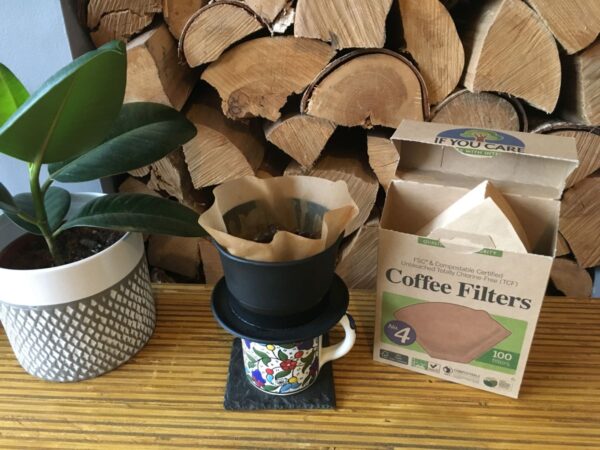
Being an environmentally conscious individual, you’ll want to make sure that the whole product your buying is ethical. This includes how the coffee packaging.
When buying coffee, good environmentally friendly packaging can be a sticking point – much of the packaging on the market is non-recyclable. This is largely because the coffee needs to be kept fresh and have a decent shelf life. Any sort of porous packaging can cause issues with the quality of the coffeee.
However, it is possible to get sustainable coffee bag packaging nowadays with materials such as bioplastics and kraft paper being used, as well as LDPE 4 plastic (look out for the plastic resin code), which is recyclable but not particularly good for the environment.
If you’d like to read more on this area, check this blog out on can coffee bags be recycled.
Pods
A big one at the minute is coffee pods. Single-serve coffee pods, like those used in Nespresso machines, have become very popular.
These pods are often criticised for their environmental impact, and rightly so. A lot of pods are made from plastic and are not easily recyclable.
However, some ethical coffee brands are working to make pods more sustainable by using biodegradable and compostable materials. These eco-friendly pods are made from materials like bioplastics, plant-based plastics derived from renewable resources such as cornstarch or sugarcane. When disposed of properly, these pods can break down in commercial composting facilities within a matter of months.
Whilst compostable pods are a step in the right direction, it’s important to note that they still have some drawbacks. They often require specific composting conditions to break down fully and cannot be composted in a typical home compost bin. Even biodegradable pods still contribute to the problem of single-use packaging waste, as they use a significant amount of material for a relatively small amount of coffee.
Tiny Eco favourite ethical coffee brands

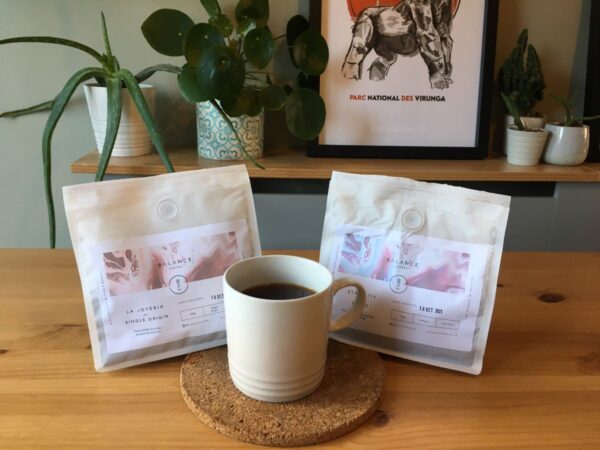
I’ve had the pleasure of drinking plenty of cups of ethical coffee. A few I’d personally recommend are:
- Bird & Wild
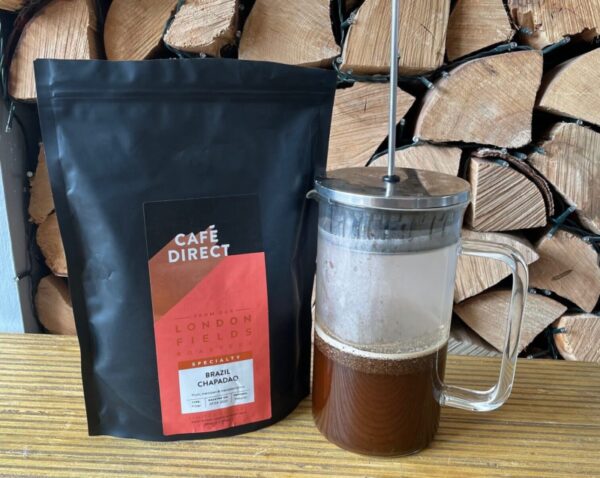
- Cafedirect – you can read my Cafedirect review here
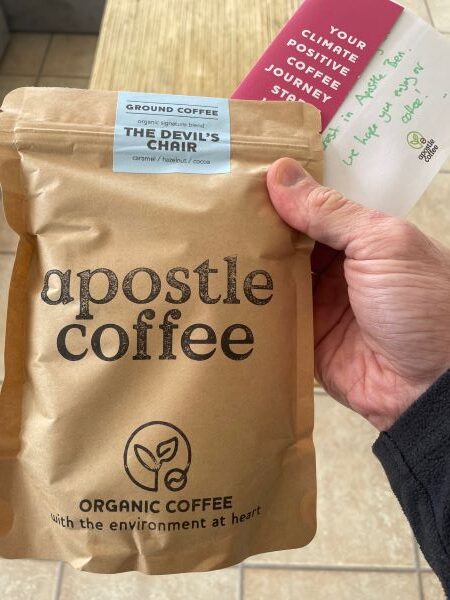
- Apostle Coffee
- Cafeology
- Balance Coffee
- Alpaca Coffee
- Equal Exchange
- Union Hand Roasted
Unethical coffee companies to avoid
Alongside choosing ethically sourced coffee on a regular basis, there are definitely some unethical coffee companies that you should avoid altogether.
These include:
- Nespresso (owned by Nestle)
- Nescafe (owned by Nestle)
- Costa Coffee (owned by Coca-Cola)
- Douwe Egberts
FAQs on ethically sourced coffee
Read more on coffee