
Is It Recyclable?
Recycling Resource Guide
Are you wondering if something is recyclable? Maybe it’s a product or just the material?
Although it sounds easy, it’s not always as straightforward as it seems. Some things are labelled as ‘recyclable’ but have to be taken to a specialist facility. What the consumer really wants is know if it’s recyclable from home. If not, what should they do?
The Tiny Eco Recycling Resource Guide will talk you through common household items and products to see if they’re fully recyclable.
You can use the menu just below to jump down to an item you have in question.
What makes something Recyclable?
For an item to be considered recyclable, it must meet these criteria:
- Made from a material that can be reprocessed and reused, like glass, metals, some plastics and paper.
- There are established recycling collection streams and facilities capable of handling that material. This infrastructure varies greatly by location, even within a small country such as the UK.
- The item does not have excessive contamination, like food residue stuck to it. It needs to be reasonably clean.
- Someone is willing to purchase the recycled output created from that waste stream to incorporate back into manufacturing supply chains.
Common Recycling Symbols
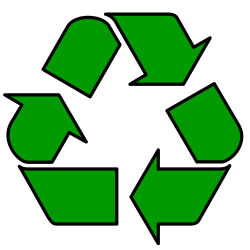
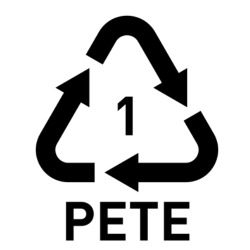

Recycling symbols help quickly identify if a material is technically recyclable or not.
Here are the main recycling symbols you may see:
- Mobius Loop (classic arrows in a circle) – Indicates that an item is recyclable but this does not guarantee that your local recycling programme accepts that material. More investigation is required beyond just this symbol alone.
- Triangles with a number – These are called plastic resin codes and identify different plastic polymers. Not all numbered plastics can be recycled, but #1 and #2 plastics, like water bottles and milk jugs, generally are the most widely accepted by recyclers.
- Green dot – Indicates the manufacturer has made a financial contribution towards the recovery and recycling of that packaging in Europe. Does not necessarily mean the package is actually recyclable.
Reduce, Reuse, Recycle
You’ve all heard the saying ‘reduce, reuse, recycle’. This three-word phrase creates a hierarchy of actions to take.
When it comes to living a sustainable life, the best course of action is reduce first. This might mean not buying something, so no waste is created at all.
Of course, we all have to buy things. This is unavoidable. Check out our material sustainability guide to help you purchase the most environmentally friendly items.
The next best thing to not using something at all, is for it to be compostable. This means the material or item can ultimately be used to create soil and be incorporated back into the ecosystem.
After this, we then have recycling as our main option. The more we recycle, the less waste ends up in landfill or being burned.
In between these points sits re-gifting and reusing as viable options to reduce your impact on the world.
Recycling Guide
Below you’ll find a description of common household materials and whether they can and should be recycled or not.


