Struggling to find good, ethical places to eat and drink? How about to shop at or stay over?
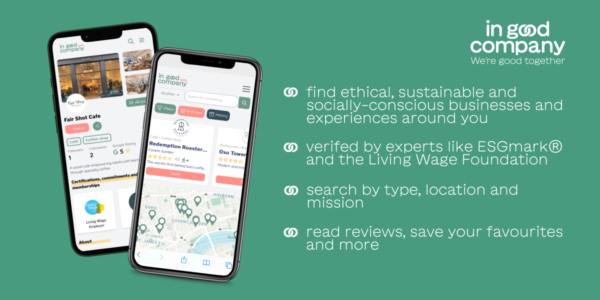
That’s exactly what female-led In Good Company are aiming to solve. Through their website and online platform, In Good Company want to help you with feel-good, guilt-free experiences.
I recently had the chance to discuss the company, the origins, ethical consumerism, future plans and more with founders Alexandra Birtles and Sarah Kingston. You can read the full and enlightening conversation below.
And just to say on a personal front, it’s great to have impassioned entrepreneurs working to connect the dots for those who want to make better and more ethical choices whilst still enjoying life!
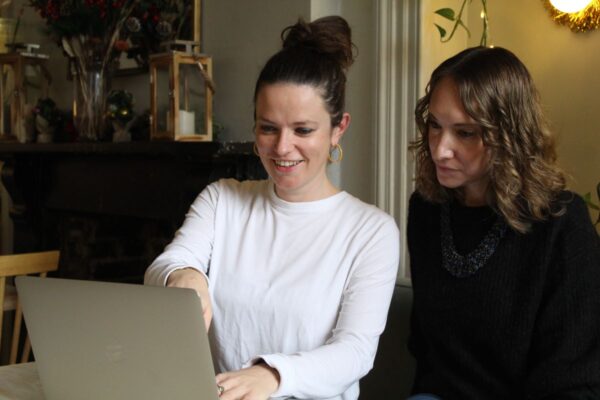
In a nutshell, what is In Good Company and what do you do?
The easiest way to think about us is Tripadvisor with ethics! We match people who care with good companies around them, effortlessly.
In Good Company is there for those of us who are seeking more ethical, independent places to eat, drink, shop and stay, and are struggling to find them. So you can feel good about getting out and about, rather than worrying about the impact your choices have on the planet and more about living your life.
We do the hard work of finding and checking the businesses’ ethical credentials – and share this simply and transparently on each business profile. And because we know quality matters too, there’s also photos, ratings and reviews from other like-minded people.
What inspired the beginnings?
Sarah and I met taking part in Year Here, a social innovation programme. We hit it off discussing our love for exploring local spots (especially for good coffee and great food!) and businesses making a positive impact.
But we both had the same problem: we thought it was such a no-brainer to switch from large chains to independent, ethical businesses and wanted to do it whenever we could, but found it so tough to find them. And others said the same.
We also saw, ironically, these good businesses were struggling to find enough customers. They lacked digital skills and time for marketing. That’s when the idea for In Good Company was born: a platform to connect customers who care with ethical businesses in need of support.
What does a day in the life of an ethical business founder look like?
Each day is different but they do all start with coffee – I can’t do a thing until I’ve had at least two cups. And one of the great things about my job is that I visit lots of ethical coffee companies, so I always treat myself to a bag of beans to bring home.
We then kick off the day with a virtual standup – we’re a remote and small team but this means we start the day with some quality connection, as well as making sure all work is on track.
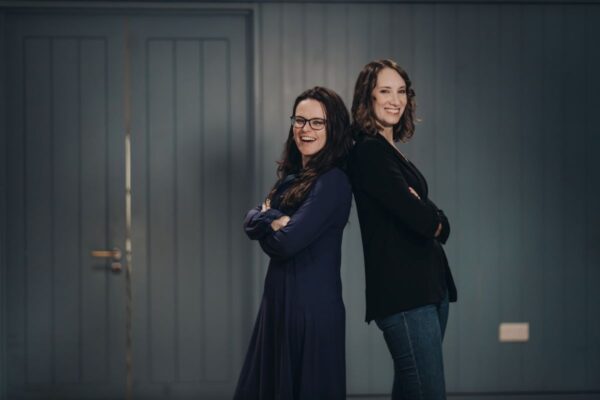
If I’m home working then I’ll be reviewing our tech, doing marketing and social media, writing funding applications, reaching out to potential customers, re-visiting our business plan, vetting companies to go on the site, paying invoices – you name it, we do it all!
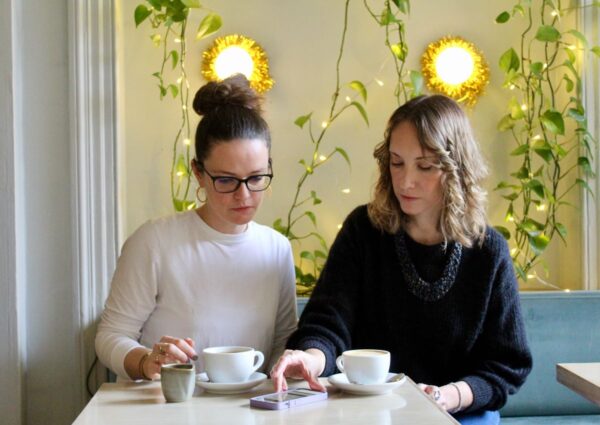
We tend to get together in real life once a week and usually pick a good company to work from. Some of the ethical businesses on our site, especially the cafes, are perfect for coworking – with delicious food and drinks alongside!
I often go to sustainability or start-up events in the evening, otherwise I tend to break for dinner and a bit of down time before logging back on for a few more hours before bed. There’s no doubt that running your own business is a lot of work! But I love it.
What are the main issues stopping people from consuming more ethically?
I start from the place that overall people are good – they care, they want to make better choices, and they want to feel like they are doing some good in the world.
But we’re human. And that means we have a lot of other pressures in our lives. We’re juggling different demands on our time, we’re worried about money (especially right now), or we’re just kind of disconnected from what a difference choosing better will make. And that’s not helped when we don’t see the behaviour we’re asking individual consumers to make also being modelled by big business or government.
There’s lots we can do as ethical businesses to make it easier and more convenient, but I also think we need bigger change. For example, why do we still have so much needless plastic packaging in our supermarkets?
We need significantly easier end of life options for the items we buy. We need to stop funding things which aren’t making things better for people or the planet. And we need to support more companies to become more sustainable and ethical so it becomes the status quo.
Do you think ethical consumerism has a place on the high street?
I think you’d expect me to answer with a resounding yes! But I really do.
I know a lot of e-commerce ethical brands who love running pop-ups and market stalls because it gives them the chance to have a much deeper conversation with customers. It’s also a great way to introduce people to ideas or issues they might not encounter online in their particular part of the internet.
We need human connection so badly – for our wellbeing, for stronger communities and a more functional society. Clearly I love technology, but we should be cautious about a world in which it’s used to keep us indoors and glued to our screens, instead of actually connecting in real life.
It’s no secret the high streets are really struggling. So rather than sleep walk into a world where the only shops are multinational chains or shuttered lots, there is an incredible opportunity to rethink the high street to make them places of community, rental, repair and creativity where independent ethical companies are thriving.
What are the future plans for In Good Company?
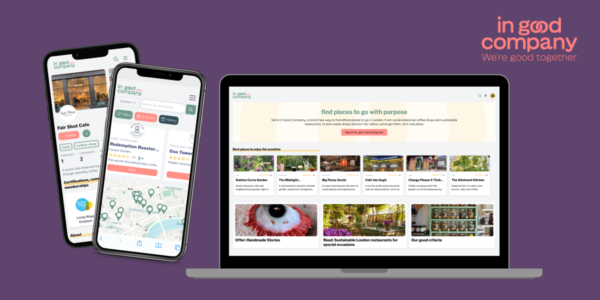
Despite having just cautioned about tech, our future does involve a lot of it!
We’re busy getting our full mobile app ready for launch on iOS and Android (right now it’s available via the web). After that we’ll be expanding outside of London across the UK – and I’m open to requests if you want us to come to your town or city next!
Ultimately, we want to connect more people with the amazing, but so often hidden, ethical businesses on our high streets and side streets. But to do it in a way that is fun, appealing and makes them feel good. To show them that being ethical doesn’t have to mean sacrificing quality. And that actually by choosing good, your whole experience will be so much better.
What’s your best tip for living a more sustainable life?
I’m a big fan of the basics like always carrying a reusable coffee cup, water bottle and a spare tote bag.
But actually, my biggest tip is learning to look beyond the easy option of hitting ‘buy’ on your phone when you think you need something new. So many of the things we think we need to buy can instead be fulfilled by stuff we already own – old t-shirts as cleaning clothes, empty jars as tupperware – or can be found on sites like Olio or Nextdoor.
I read a tonne and my local library is an absolute godsend. Then when I do choose to buy new – mostly in person, from stores I know and love, where I know my purchase makes a difference, it actually means something more.
Can you give a shout out to other sustainable businesses doing great things?
It’s so hard to name just a few as I’m spoilt for choice by all of the companies listed on In Good Company, and all the incredible ethical businesses I’ve got to know along the way!
I adore Washed Up Cards and basically exclusively buy from them for cards now. And Socko – Emma the founder has been determined since day 1 to be able to swap out the elastane in their sock cuffs for a recycled version and she finally managed it last year. That kind of care and determination is to be applauded.
A big thanks to Alex and Sarah for taking the to answer my questions and give us a detailed insight into their world. If you live outside London, hopefully they’ll be coming soon to a city near you.
Make sure you take a look at the In Good Company website and why not give them a follow on Instagram?
More good reads on community action…

Richmond’s Elizabeth Twining Almshouses Proving Passivhaus Works For Accessible Housing

Coppers Meadow: One Of The Most Eco-Friendly New Build Developments In The UK Now Ready

Biodiversity Net Gain One Year On: Is This World-Leading Scheme Taking Root?
How Primary school children of Greater Manchester are tackling plastic waste with Eco Refill Shops