Top Takeaways
>> Ethical engagement rings are more sustainable and don’t cause physical habitat destruction like mines do.
>> Lab grown diamonds and moissanite are popular ethical gemstones.
>> Ethical engagement rings are fully traceable and come from conflict free zones.
Let’s talk about ethical engagement rings. It’s not a topic covered all that often.
Mainly because mined diamonds have a monopoly over the engagement ring market.
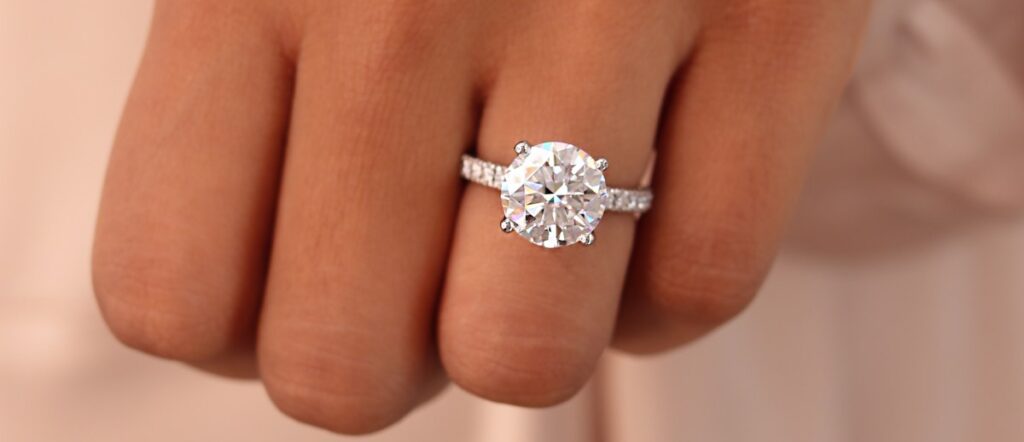
When I proposed in 2020, I decided to go for an ethical engagement ring. I bought mine from Etsy UK and what a great decision this has been (yes, my partner agrees too!).
Buying a more ethical ring is a great way to support sustainability and environmentally friendly action. Not just this though, you’ll also be buying a fantastic, high quality item that is just as good, in terms of its physical properties, as a mined diamond.
My knowledge can only take you so far, so thanks to online jeweller Lily Arkwright for answering some of my questions on this topic.

Why are mined diamonds bad for the environment?
Diamond mining comes with a lot of negative environmental impact.
Diamonds are mined using open pit or underground mines. If you look at any pictures of diamond mines, you’ll notice how large these operations are.
Mined diamonds are bad for the environment as it involves completely levelling the area of any vegetation, exposing the earth and digging down. Some of the negative impacts of diamond mining on the environment include:
- Natural habitat loss
- Huge reduction in biodiversity
- Soil erosion
- Water source contamination
The impacts of diamond mining on the planet versus the minimal impact of lab grown stones is another big advantage that makes lab grown gems better from an ethical point of view.
That said, lab grown gemstones do require a lot of energy to simulate the high pressure, high heat conditions where natural stones are created. With lots of energy, often comes lots of emissions. I say often because renewable sources can significantly reduce the amount of greenhouse gas emissions associated with lab grown gems.
You can have a closer look at the lab grown diamonds vs mined diamond debate here.
What are ethical engagement rings?

Ethical engagement rings is a broad term that captures a number of different elements.
To consider whether a ring is ethical or not, you need to look at four main areas:
Gem Material – perhaps the biggest area for ethics is the gemstone itself. With ethical engagement rings, materials such as moissanite and lab grown diamonds are used. These high quality gems are produced in the laboratory, which means there is no need for any mining at all. This cuts out a whole load of harmful and environmentally damaging practices, not to mention poor working conditions.
Sustainability – mining for diamonds and transporting them to all corners of the globe uses a lot of energy. Ethically made rings have a lower overall environmental impact footprint, making them more sustainable.
Traceability – do you know exactly where your gemstone has been sourced from? Traceability is a cornerstone of ethical buying and selling. If there’s nothing to hide then all steps of the supply chain should be accessible.
Affordability – thanks to the reduced costs involved in physical mining and transport, moissanite and lab grown diamonds cost less than traditionally mined diamonds.
Where are ethical engagement rings made?
As ‘ethical engagement rings’ is an umbrella term, where they are made is dependent on the style, cut and gemstone.
The most ethical gemstones are produced in a specialised laboratory under controlled conditions.
Let’s consider an ethical, lab grown diamond as an example.
As the name suggests a lab grown diamond is ‘grown’ under highly regulated conditions in a laboratory. This process uses advanced technology that replicates the development of a mined diamond under the Earth. Natural diamonds form when carbon atoms crystallise under certain conditions – namely heat and pressure – over millions of years.
The diamonds grown in lab conditions follow suit. The most common process is known as HPHT (high pressure, high temperature) which takes place in a sealed chamber full of pure carbon and a fragment of diamond to ‘seed’ the reaction. Chemical vapor deposition (CVD) is another process to make lab grown diamonds.
Lab grown diamonds are made up of actual carbon atoms, arranged in the same characteristic diamond crystal structures as natural diamonds. This means they perform and exhibit the same brilliance and sparkle as a mined diamond.
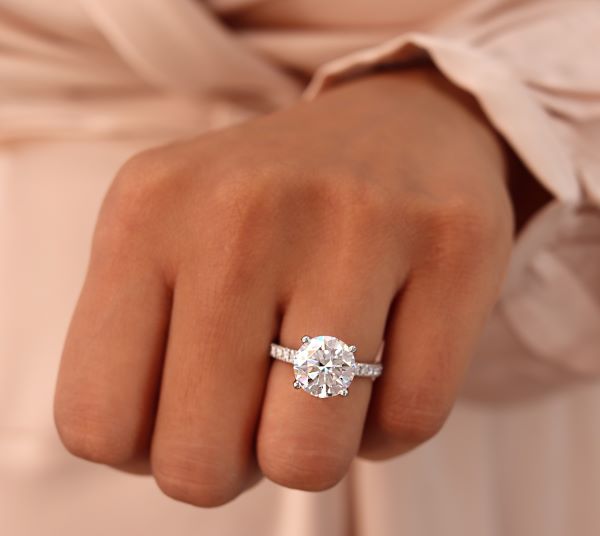
Moissanite engagement rings are also a very popular type of lab grown gemstone. Although appearing very similar to a diamond, moissanite has different chemical and physical properties when compared to diamond.
Every lab grown diamond for an ethical engagement ring should be fully certified and accompanied by an industry standard – GIA, IGI or GCAL – grading report. This includes the cut, colour, clarity and carat weight specifications. This means all lab grown diamonds and moissanite stones are fully traceable.
This isn’t forgetting the metal ring itself too. It’s important that the precious metal has been UK hallmarked, which means it has been verified by an independent party. Some jewellers, such as Kimai, use recycled gold for the ring.
Is ethically mined diamond a sustainable alternative?
The biggest diamond mining countries in the world are South Africa, Botswana and Russia.
In most instances, ethical diamond mining usually refers back to the societal impact rather than environmental impact. It’s clear that all mining will harm the local natural environment.
For this reason, ethically mined diamonds are generally referred to as ‘conflict free diamonds’. This is because money made from mining diamonds in certain countries helps finance civil wars and other human rights violations.
With mined diamonds in many countries, there’s also a severe traceability downfall after they are cut. When the process isn’t transparent, it’s generally not sustainable.
Buying conflict free diamonds is definitely a step in the right direction.
The Kimberley Process is a certification scheme that was started to try and prevent conflict diamonds from entering the mainstream diamond market. This scheme is named after the kimberlite rocks where diamonds are naturally found.
When compared to lab-grown diamonds, they still aren’t as ethical or sustainable.
Are there other ethical gemstones?
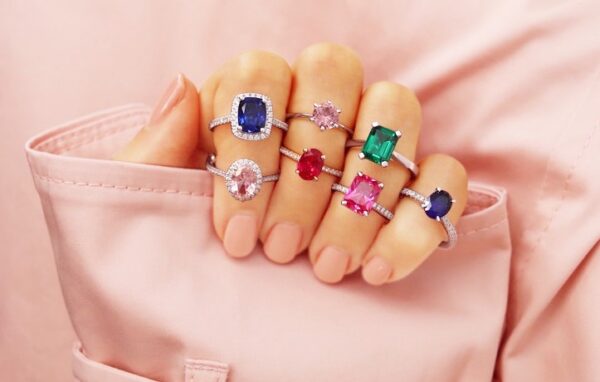
Yes, it is possible to get other ethical gemstones.
Lab grown diamonds, moissanite and coloured gemstones can all be bought ethically. A key indicator to look out for here is gemstones sourced and produced by Chatham.
Chatham are a company founded over 75 years ago who are the world’s leading source of high-quality laboratory-grown gems. Their production process ensures that all ethically produced gemstones are rich in colour and have just as much sparkle and clarity as their mined variations.
Other ethical gemstones include:
- Emeralds
- Sapphires
- Alexandrite
- Ruby
- Padparadscha
Place to get ethical engagement rings
As mentioned above, I bought my ethical moissanite engagement ring from Etsy UK. But there are plenty of places you can buy conflict free rings from now.
One of these is Kimai, who were recently featured on Dragon’s Den in January 2024.
Another place is Lily Arkwright, a Manchester-based lab grown diamond specialist.
I hope that has given you a much better understanding of what ethical engagement rings and the key points that make them better, certainly from a people and environment position, than mined gemstones.
If you found that interesting, read more below…