Eco leather is one of the newer materials on the high street. It’s supposed to offer a more sustainable material option to both traditional leather and faux leather, but how true is this?
How is eco leather different?
The term ‘eco leather’ spans a range of different types of leather-like materials. The biggest point to note is that all eco leather products are plant-based. Or at least they should be.
The bullet points below sum the differences up:
The Leather Differences
Eco leather = plant-based
Traditional leather = animal-based
Faux leather = plastic-based
Plant-based leather alternatives include those made from:
- Cactus
- Mushroom
- Cork
- Eucalyptus bark
- Coconut
- Pineapple
- Cereals (made from bio-oil)
- Leaves
These plant-based materials can be used to make all sorts of products, including wallets, shoes, clothing and eco friendly backpacks.
Even more, eco leathers should be tanned using more sustainable methods than traditional leather. Eco-tanned hides are exclusively treated with vegetable-based and organic tannins.

Eco leather vs faux leather
Even though many see faux leather as a better and more ethical alternative to real leather, it’s important to note that this material, known as pleather, is plastic and relies on fossil fuels to be made. Faux leather is not environmentally friendly.
Pleather tends to be made from synthetic polymers like polyurethane (PU) and polyvinyl chloride (PVC). The manufacturing of faux leather uses toxic chemicals, creates lots of waste and pollutants. These products aren’t biodegradable and are very hard to recycle.
How is eco leather made?
Since the term eco leather is a catch-all for all sustainable leather alternatives, eco leather products are made in different ways. This being said, some types are significantly more eco-friendly than others.
In the case of leather made from plant-based sources like pineapple and cactus, the process usually involves breaking down the material into workable fibres and weaving them into sheets.
Cork leather, on the other hand, is made by collecting tree bark, which is then dried for months, soaked in boiling water, and pressed into thin sheets. This is usually done with an additional fabric, like organic cotton, to strengthen the finished product and make for a fully biodegradable fabric. Cork is a super sustainable material and one of my favourites.
Some eco plant-based leathers do have the addition of plastics, mainly polyurethane, as a finishing or backing material to give it strength. Look out for this if you want to avoid plastics altogether as it almost defeats the objects of going for a more sustainable option.
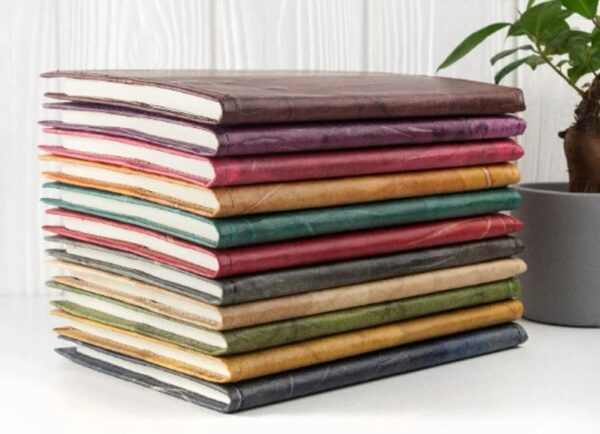
Tanning and finishing
The tanning and finishing stages for eco leather involve the use of vegetable-based and sometimes organic tannins.
They use natural chemicals that bind the leather proteins together to create its signature look and feel. These compounds are generally derived from tree bark, leaves, and even fruits.
When it comes to the finishing process, eco leather also uses biodegradable, vegetable-based dyes and natural resins. This is a brilliant way to combat the harmful waterway pollution usually associated with conventional leather production.
Be careful of leather products that have just been ‘sustainably tanned’. This leather still comes from cows and is made in the same way traditional leather.
The environmental benefits of eco leather
- Made from plant-based ingredients that are renewable and biodegradable
- Fabrics made from pineapple leather, cork leather, cactus leather and mushroom leather are much less resource-intensive
- The plant fibres used are often by-products of the food industry, largely offsetting the environmental impact of growing and harvesting crops.
- Reduced carbon emissions
- Reduced materials to landfill
- Vegetable tanning – avoids the use of chromium (90% of all leather is chrome tanned), which a leading cause of water pollution
So, what’s the issue with traditional leather
When left untreated, traditional leather is highly durable and biodegradable. However, this isn’t the case in the fashion world.
As you know, leather mainly comes from the skin of a cow. Of course, this isn’t vegan friendly.
The whole farming of cattle and production of leather is one of the leading causes of marine eutrophication, deforestation and greenhouse gas emissions. In fact, in the Amazon, the cattle industry is the largest contributor to deforestation. Not good. Especially when this area is so high in biodiversity.
Are there any drawbacks to eco friendly leather?
Whilst choosing eco leather is an overall more sustainable option than going for conventional leather, it doesn’t mean that it’s a perfect product.
The many sustainable plant-based leather materials are highly innovative and somewhat new to the market, this means they come with quite a high price tag. Not only are they expensive, but also hard to find as many items tend to go out of stock quickly on online markets.
These types of eco leather are also not as durable as real leather. This makes sense, as animal leather has ultimately evolved to be a tough layer, protecting an animal for its lifetime.

Another drawback is that not all eco leathers are biodegradable. Although mainly made from natural, biodegradable ingredients, plant-based leathers are often mixed with extra fabrics (like cotton) and petroleum-based resins to support and enhance its structure.
The use of petroleum-based resins in pineapple leather and sometimes cactus leather, for example, makes the material unsuitable for composting.
This means that you’ll have to do your due diligence and dig deep into all the materials used to ensure that your eco leather is as sustainable as you want it to be!
Vegetable-tanned leather, despite not releasing harmful chemicals into our waterways and using less energy than chrome-tanned leather, still suffers from some of the same environmental drawbacks as conventional leather.
One of these drawbacks is high water usage. Throughout both the livestock raising and tanning stage, as well as the production of as much as 5.0 gigatonnes of CO2 equivalent, making cattle the world’s driving agricultural source of GHG emissions.
Tiny Eco Verdict
Plant-based leathers aren’t perfect materials, but when compared to conventional animal leather, they’re a much better choice if you’re looking to reduce your carbon footprint and opt for a more sustainable alternative.
Even eco-tanned leathers are a better option than animal leather tanned the traditional way.
Whilst vegetable tanning has been around for thousands of years as the original leather tanning method, plant-based leather alternatives are still much of a work in progress, especially when it comes to biodegradability.
The industry is bound to improve in the future, so in the meantime, you can rely on second-hand leather to make your wardrobe more sustainable at no extra cost!